
From Love Story to The Devil Wears Prada: Why the Clothes No Longer Convince
Bessette’s familiar looks and Runway’s lavish wardrobe are easy to recognise. The harder question is whether the clothes bring the people wearing them into focus.
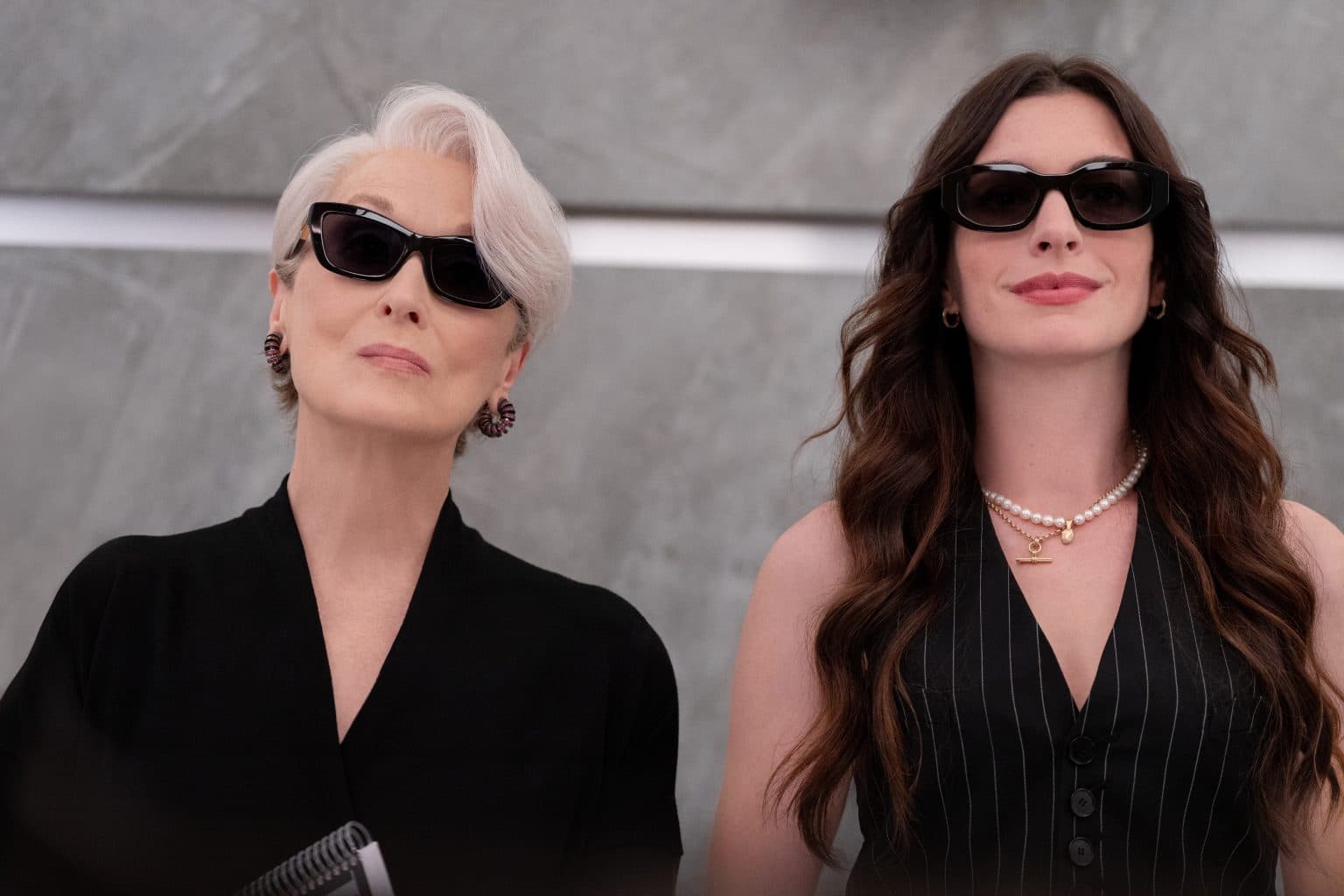
Andy walks into the Runway office in a blue sweater and receives an unexpected lesson. Miranda begins with its colour, then moves through designers, fashion companies and inexpensive ready-to-wear. Within minutes, an industry Andy thought had nothing to do with her has closed around her. One of the most convincing moments in the 2006 film The Devil Wears Prada rests on this unassuming garment.
Twenty years later, the sequel brings a larger wardrobe back to the screen. Meanwhile, FX’s Love Story: John F. Kennedy Jr. & Carolyn Bessette returns to white shirts, black dresses, spare coats and a much-remembered wedding dress. One production revisits a fashion workplace; the other reconstructs a public couple’s private life. Both leave a question once we have recognised the clothes: what happens next? FX series information, sequel production information
Getting the look right leaves the performance exposed
Bessette was photographed often enough for a neckline, a pair of sunglasses or the position of a handbag to call up a familiar image. The costumes in Love Story therefore have a demanding point of comparison: photographs that viewers already know.
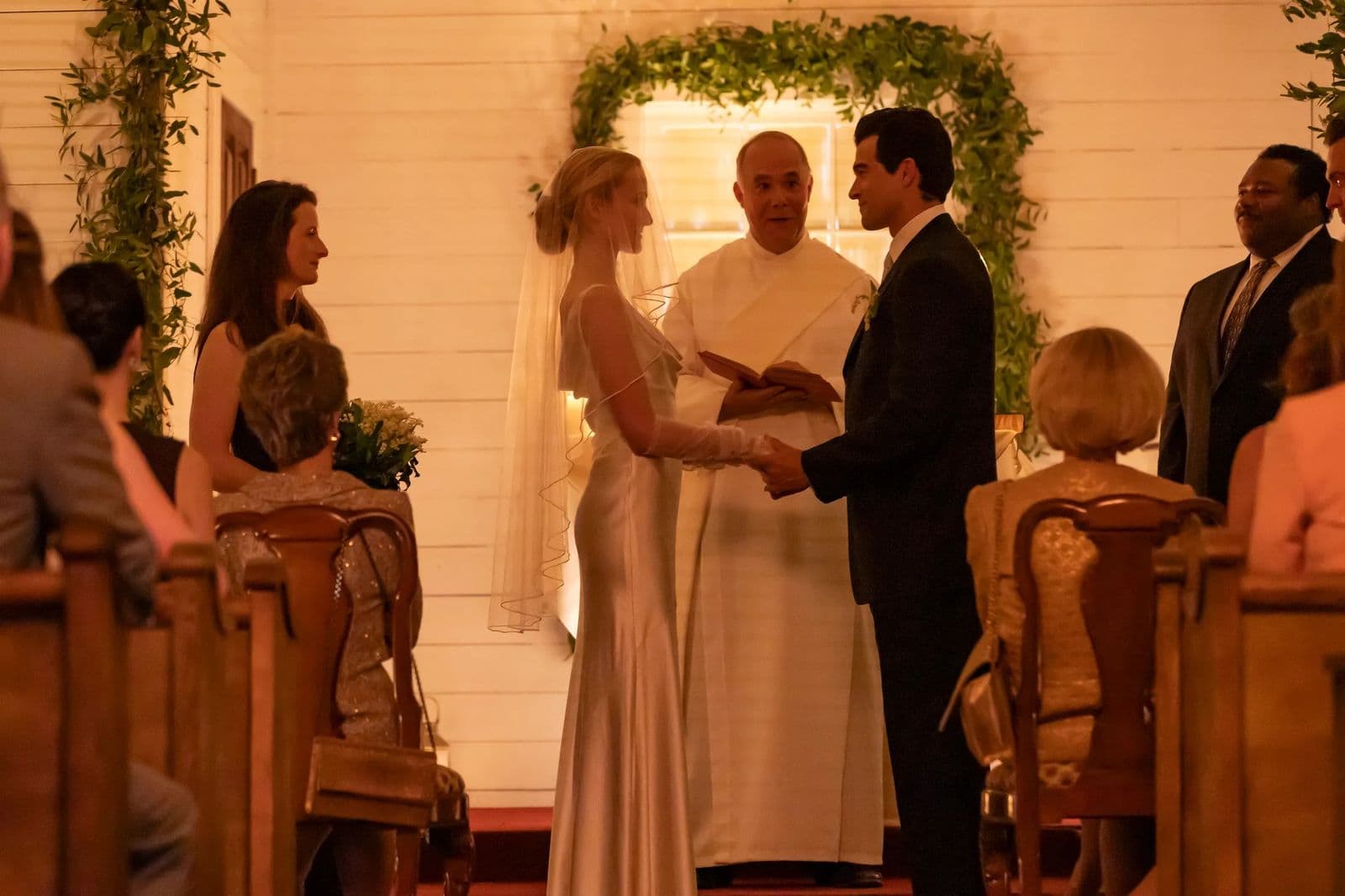
The wedding episode makes this especially clear. Sarah Pidgeon appears in a white dress, its fabric falling along her body, with restrained accessories. The image arrives carrying emotion. Viewers may remember the wedding photographs and know how the marriage ended. Recognition still needs to pass through performance and the staging of a scene before it becomes something the character is feeling now.
It is tempting to watch such an adaptation as a comparison exercise. Which look has been recreated? What has changed? Whose hair is closer to the original? The exercise is absorbing, but it can leave a drama at the entrance to a costume archive. To become a character, Bessette needs things a photograph has not preserved: a pause, impatience with a stranger, a habitual hesitation on entering a room.
Minimal clothes make these details unusually visible. With little ornament to draw the eye elsewhere, the actor’s body comes forward. An emphatic movement or overfull delivery can pull the person away from the appearance. Pidgeon’s performance is worth discussing through those interactions, beyond a comparison of faces.
The wardrobe establishes a period and a social position. The drama must also give this woman a rhythm of her own. Eventually, we should forget we are waiting for the next familiar outfit.
Runway returns, and the clothes have to grow up
The Devil Wears Prada 2 has a more complicated assignment. Andy returns as an experienced journalist and features editor. Emily has moved into luxury-brand management, where commercial support becomes entangled with Runway’s survival. Molly Rogers designs the sequel’s costumes. Character information, costume design information
These changes invite a wardrobe to do useful work. An assistant and a manager may inhabit the same jacket differently. People learn to occupy space and to conceal fatigue. Andy’s pinstriped waistcoat and trousers already suggest professional assurance. The film still needs to show how she works and what she thinks of herself.
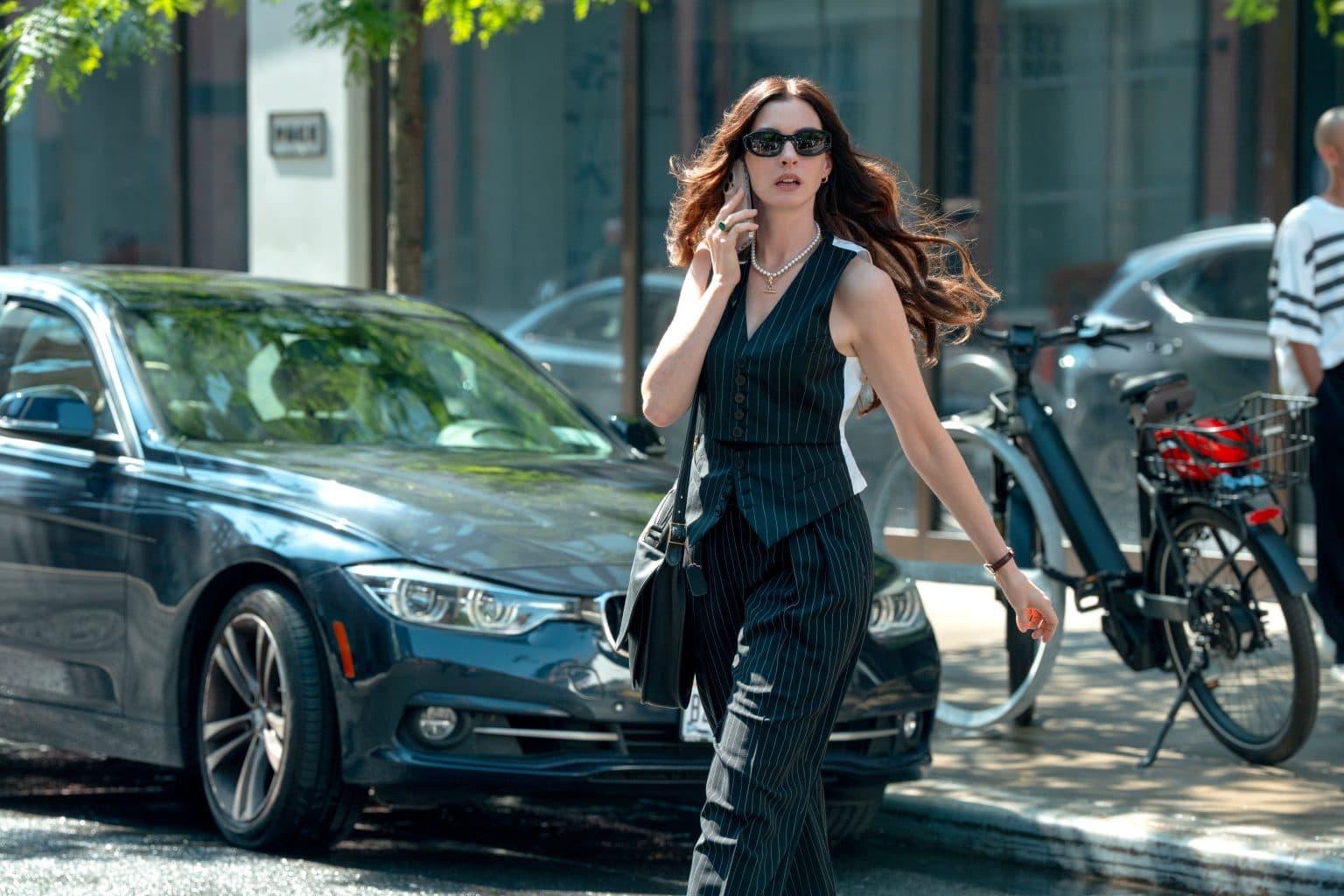
The sequel disappoints where its account of industry crisis becomes expansive while the relationship between people and clothes remains less developed. Lavish outfits assure us that fashion retains its sheen. Successive displays can also turn professional change into an upgrade in appearance. Recognisable pieces accumulate; the characters’ habits feel less specific.
A garment can attract attention, but it can also alter a scene. It can make someone anxious, expose their uncertainty or reveal where two people stand in relation to one another. The first film’s blue sweater does precisely that. Power becomes a relationship we can see.
After the still comes the scene
Screen costumes can be bright, elaborate or excessive. A comic character’s effort, or a fantasy world’s improbable wardrobe, may have a perfectly persuasive reason. Judging how an outfit looks and asking what it does in a scene require different kinds of attention.
Watch what happens when the same garment returns. Does its wearer inhabit it in the same way? When she sits down or hurries out, do the clothes help the action feel credible? Can an outfit acquire signs of use after its entrance?
A still cannot answer much of this. Social platforms can identify brands and individual pieces quickly. A film has to keep a person in her clothes for the duration of a scene. Bessette’s spare wardrobe and Runway’s finery both reward looking. The people wearing them should give us a reason to look again.