In the Mood for Love: The Qipao as a Measure of Time
Su Li-zhen keeps returning to the corridor, the stairs and the route to the noodle stall. Her dresses change; her movements remain familiar. Days pass between two similar shots.
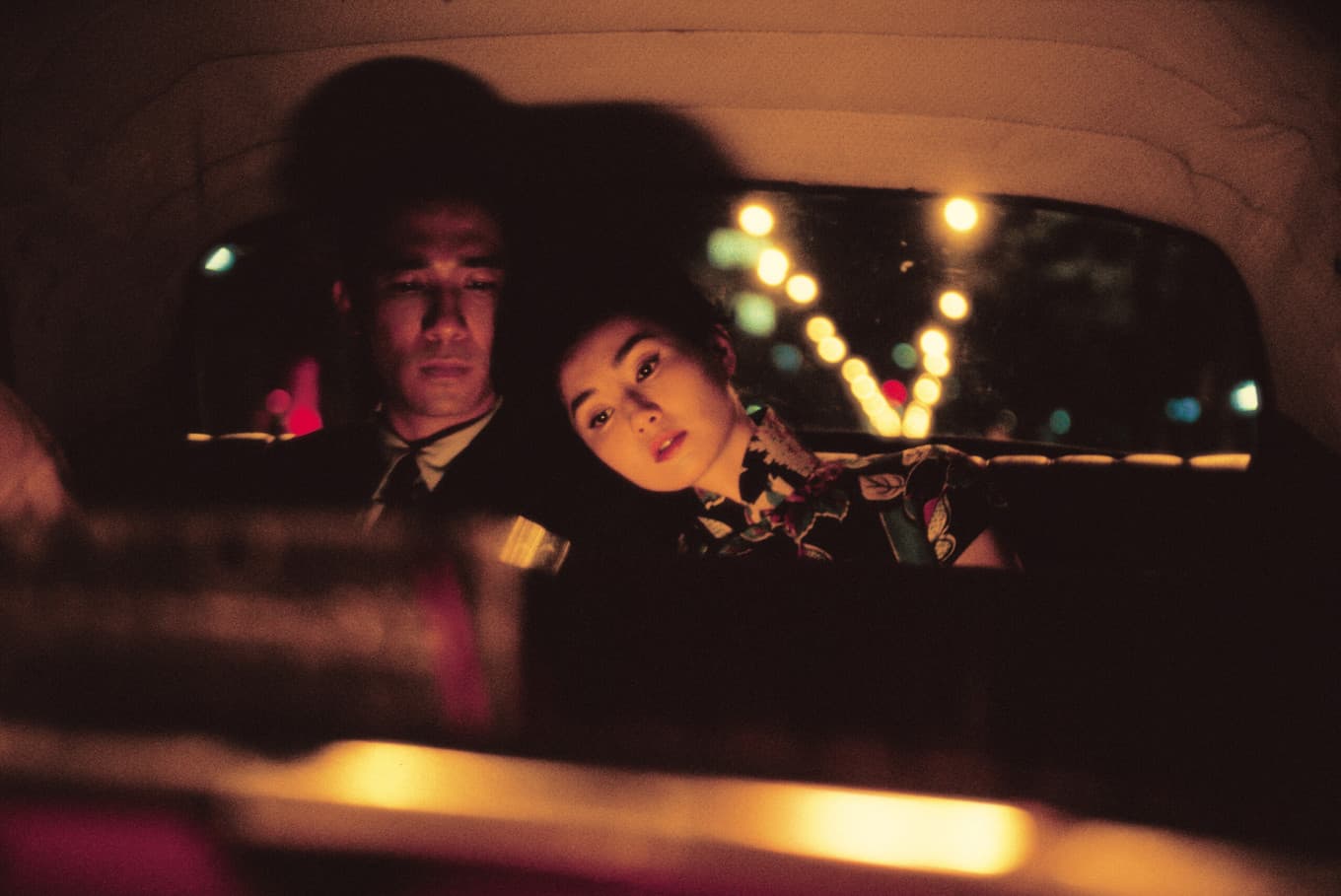
Su Li-zhen is going out for noodles again. Carrying a food container, she descends the stairs and passes through a narrow passage. The place is unchanged and her steps are familiar. She is wearing a different qipao. Wong Kar Wai does not hurry to tell us which day it is. When a similar movement returns, time has already passed.
In the Mood for Love hides much of its time in these omissions. Set in Hong Kong in 1962, the film casts Maggie Cheung and Tony Leung as neighbours. Their spouses’ secret brings them closer; they take care to maintain a distance. Home, office and street continue to map the routes of ordinary life. Film information
Su’s dresses remain immaculate. A high collar sits close to her neck; the shoulder line is clear; the cut follows her body. Several changes of clothing leave a silhouette we can still recognise immediately. Pattern and colour distinguish otherwise similar images.
This suits the woman the film is watching. In public she maintains her composure, even as her private life changes. Her clothes sustain a familiar appearance. A pause, a glance or the speed of her walk slowly tells us something different. The actor does not have to display every feeling as it arrives.
William Chang worked on the film’s production design, costumes and editing. Those responsibilities together help explain how a dress relates to the wall behind it, the subdued light in a room and the moment one image follows another. Production credits
In a photograph, colour and pattern can easily become the main attraction. Within the film, the qipao has another task: it tells us this is another passage through the same place. The woman is still recognisable. Time has not waited for her.
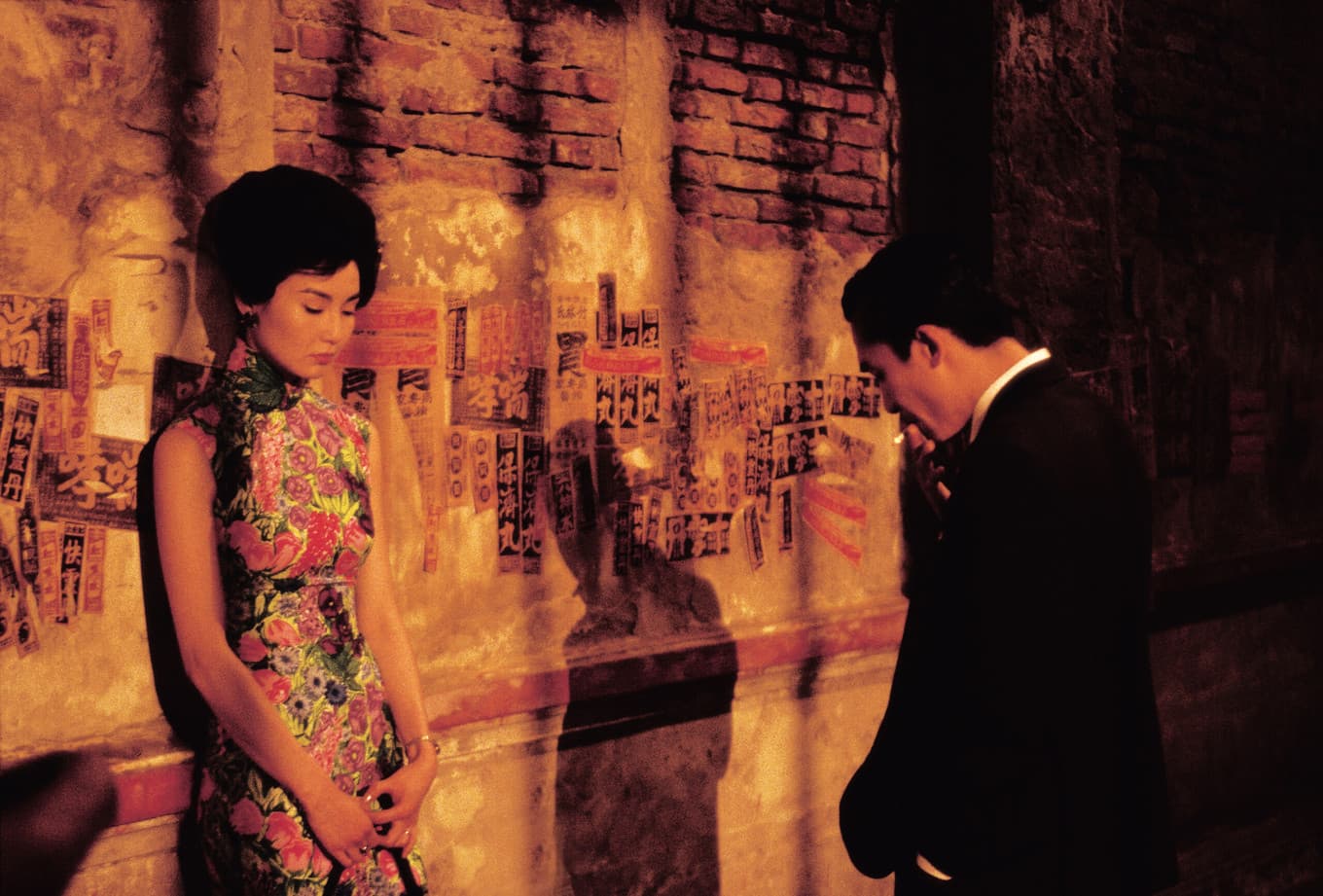
A familiar route changes with each return
The walk for noodles begins as a routine and gradually becomes a place of encounter. The film returns to these images until we start to remember them. One person passes before the other arrives. They cross without stopping. What has happened earlier quietly changes how we watch the next return.
A different dress gives each repetition a distinction. It need not supply an exact date, and the film does not assign a separate mood to every colour. We recognise a movement while knowing this moment cannot coincide with the earlier one.
Our attention shifts. At first we see an outfit. Later we notice a hand, the distance between two people or Cheung’s brief hesitation as she turns. The stable outline of the clothes makes small changes in the body easier to see.
The rooms offer little room for manoeuvre either. Door frames divide the image. Corridors are narrow; a neighbour might appear at any moment. Private feeling develops in a place others keep passing through. Even moving closer requires calculation.
Su’s silhouette remains distinct within these spaces. Her dress contains her body in a continuous outline, but a room often permits us to see only part of it. Her visible presence and the portion hidden from us produce a tension: we know she is there and cannot quite see her fully.
The cut of a dress is always being seen with the way she stands, turns or passes someone. Clothes hold an outline; space shapes the movement. A collection of outfits detached from the film would lose those actions.
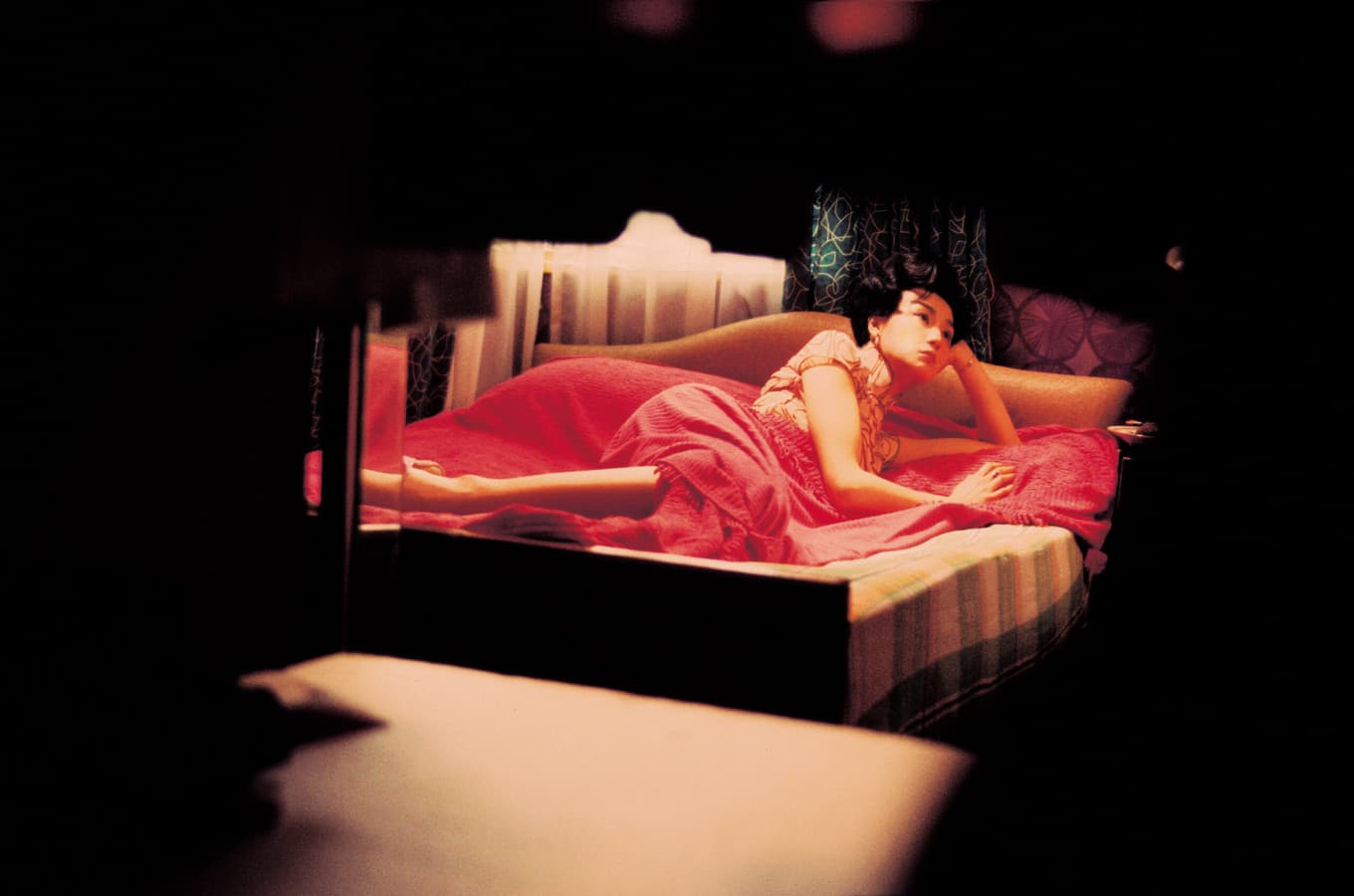
The wardrobe between shots
The dresses in In the Mood for Love readily survive a screenshot. They are beautiful, identifiable and rich in possibilities for discussing colour and cut. The film’s more painstaking work concerns how it brings the same woman back before us.
This appearance of Su carries the memory of the previous one. When we recognise a staircase or corridor, an earlier encounter comes into the image too. A new pattern appears on the dress; a familiar movement persists. Much has changed without anyone saying so.
The film does not give us an inventory of those changes. Days slip between similar images. We can see that the dress is different, yet struggle to name the moment the two people became closer. Next time, Su will still come down along the same route.