Portrait of a Lady on Fire: Who Looks, and Who Owns the Image?
Héloïse sees her first portrait and begins to question the painter. Sciamma places love within this exchange: how one person looks at another, and how she bears being looked at in return.
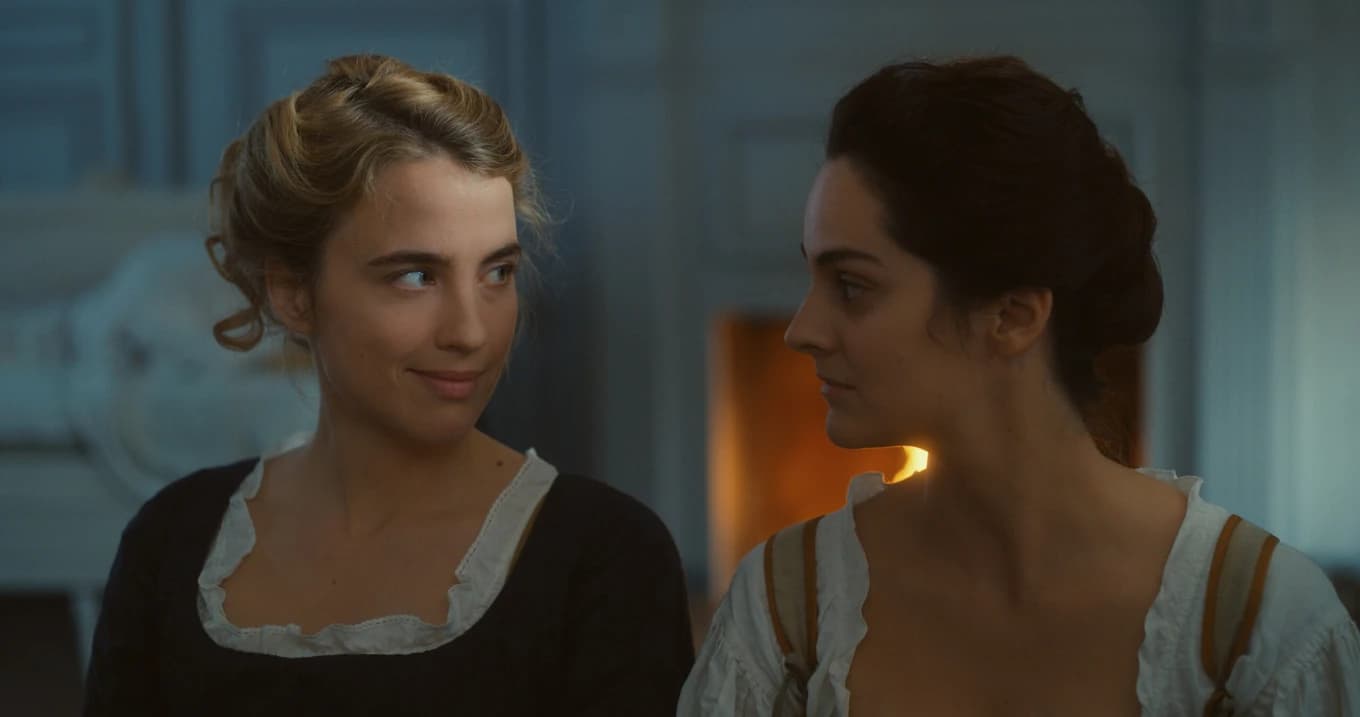
Héloïse finally sees the portrait Marianne has painted of her. Face, clothes and posture are already on the canvas, but she is dissatisfied. The painter has observed her in secret and worked from memory. Now the person being painted stands before the work and judges the version of herself she has been given.
One of the most interesting turns in Portrait of a Lady on Fire happens here. Marianne initially controls the act of looking. Héloïse’s response makes it impossible for her to continue relying solely on her own judgment. The portrait must begin again, and the relationship changes with it.
Céline Sciamma’s 2019 film places them in eighteenth-century Brittany. Héloïse’s marriage is being arranged; her portrait will be sent to her future husband. She refuses to sit, so Marianne approaches her as a companion for walks. From the outset, an artistic commission is bound up with the life this woman will be expected to lead. Film information
Before the first portrait, an old question becomes immediate: is likeness enough? Marianne has skill and knows the conventions of portraiture. Héloïse makes her realise that those conventions cannot stand in for the person in front of her.
Looking gradually becomes work they both undertake. Héloïse agrees to sit and observes the painter’s habits. Marianne believes she is studying her closely, but some of her own movements have already been recognised. Love develops through these exchanges. One person reveals a detail; the other remembers it.
In a Sight and Sound interview, Sciamma describes the painter and model as co-creators. The film gives that idea a practical scene: the model can judge the canvas, and the painter has to listen. Director interview
The clothes stay familiar; the bodies change
The wardrobe does not supply a constant stream of novelty. Familiar red and green return, and we soon recognise them. The people wearing them become more noticeable: how a woman stands, with whom she relaxes, when she tightens again.
Sciamma and costume designer Dorothée Guiraud gave the characters relatively fixed clothes. In a production interview, Sciamma discusses the weight of fabrics and their cut, paying particular attention to Marianne’s pockets. Such details serve a purpose and shape how an actor moves. Official production interview
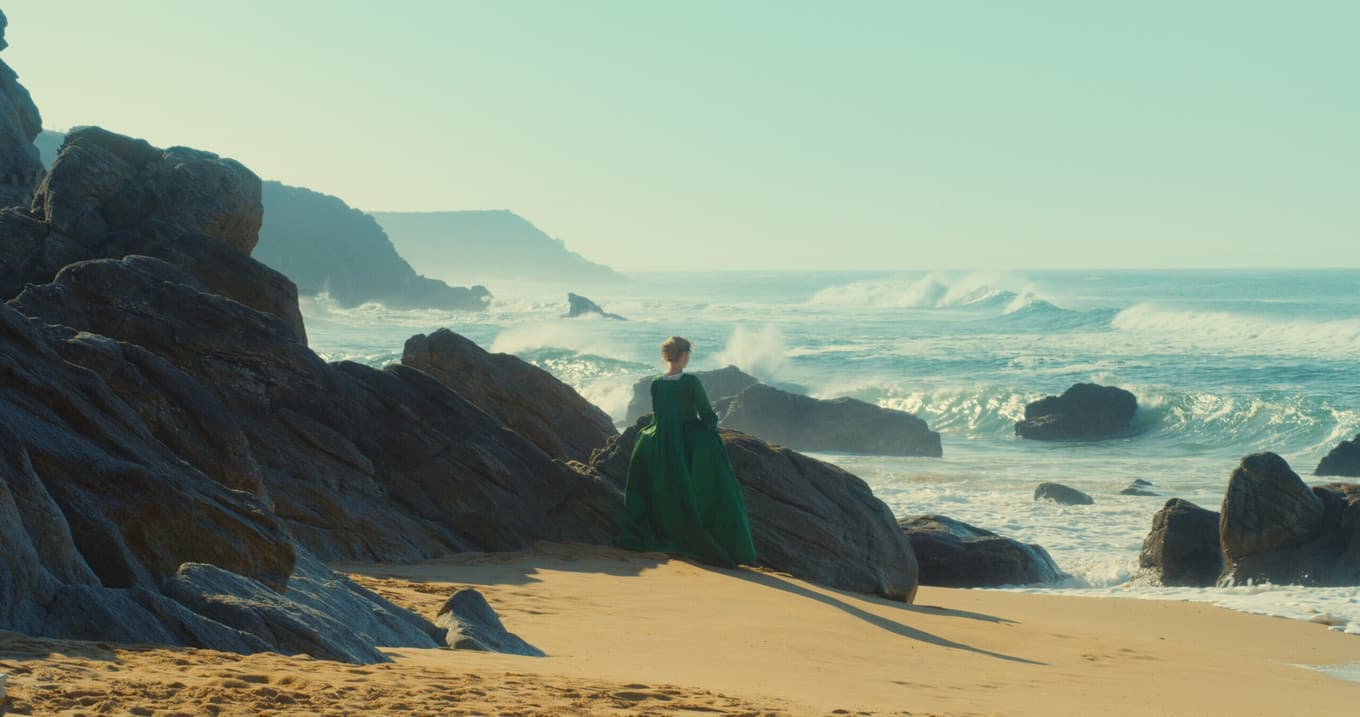
The continuity of clothing brings small actions into view. The same cuff, a hand raised again or another person beside a familiar silhouette can alter an image. Feeling sometimes reaches a movement before it reaches speech.
Claire Mathon’s cinematography sustains this proximity. Face, skin and fabric can enter the frame together; interior light gives each a different texture. The painter observes and so does the camera. Both need to allow a person time. Cinematography credit
Sound works with the same patience. Cloth moving, footsteps and breath become especially clear in scenes without a continuous score around them. When the women fall silent, something is still happening. We notice the wait before a conversation and become aware that deciding to speak is itself an action.
Sciamma planned from the writing stage for bodies and shots to carry more of the rhythm, while music would arrive in moments the characters actually experience. Official production interview
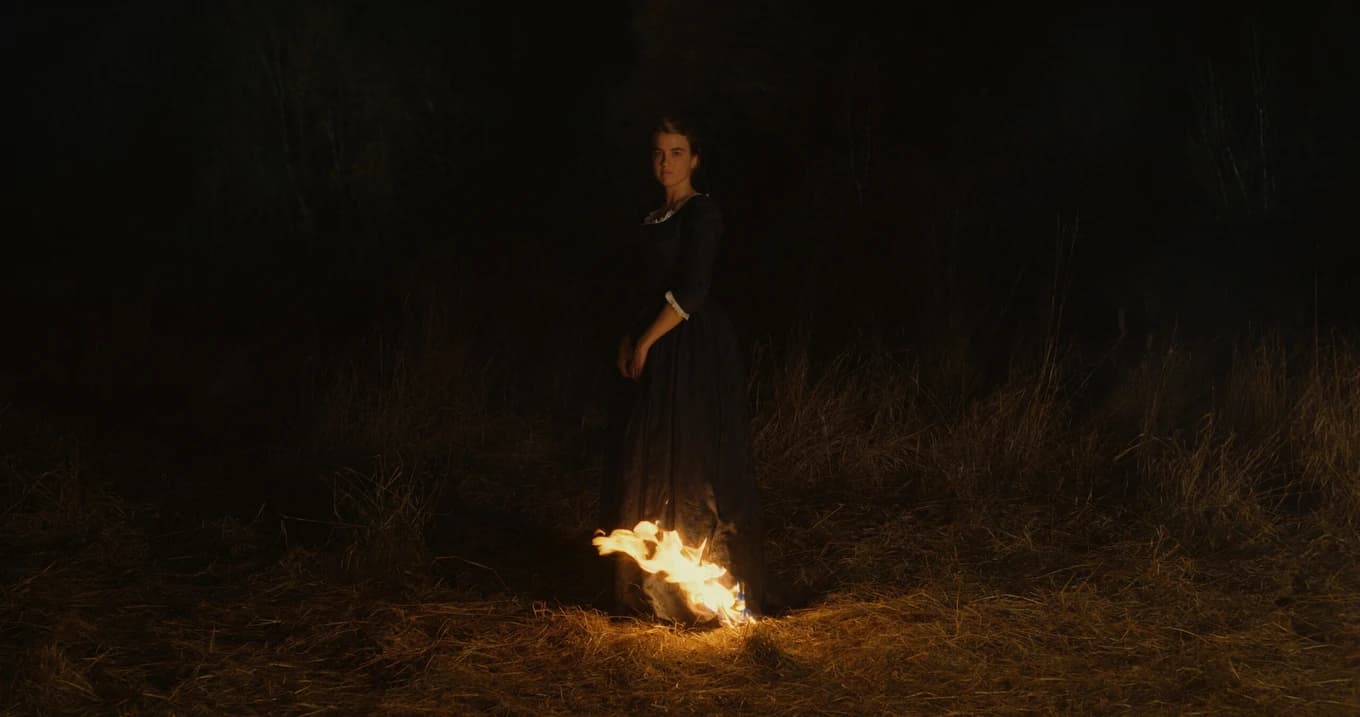
The effect becomes apparent in the final concert scene. Héloïse listens to music while Marianne watches from elsewhere. The camera remains with Héloïse’s face as her expression changes gradually. We know their past, but cannot fully explain what she feels at every instant.
The film lets the face keep changing. Marianne does not approach, and a reunion does not close the story. She has seen Héloïse. Héloïse remains in her own place, listening. The distance within the image lasts to the end.